
IVF GOT...
A STARTING POINT
-
Start Tracking.
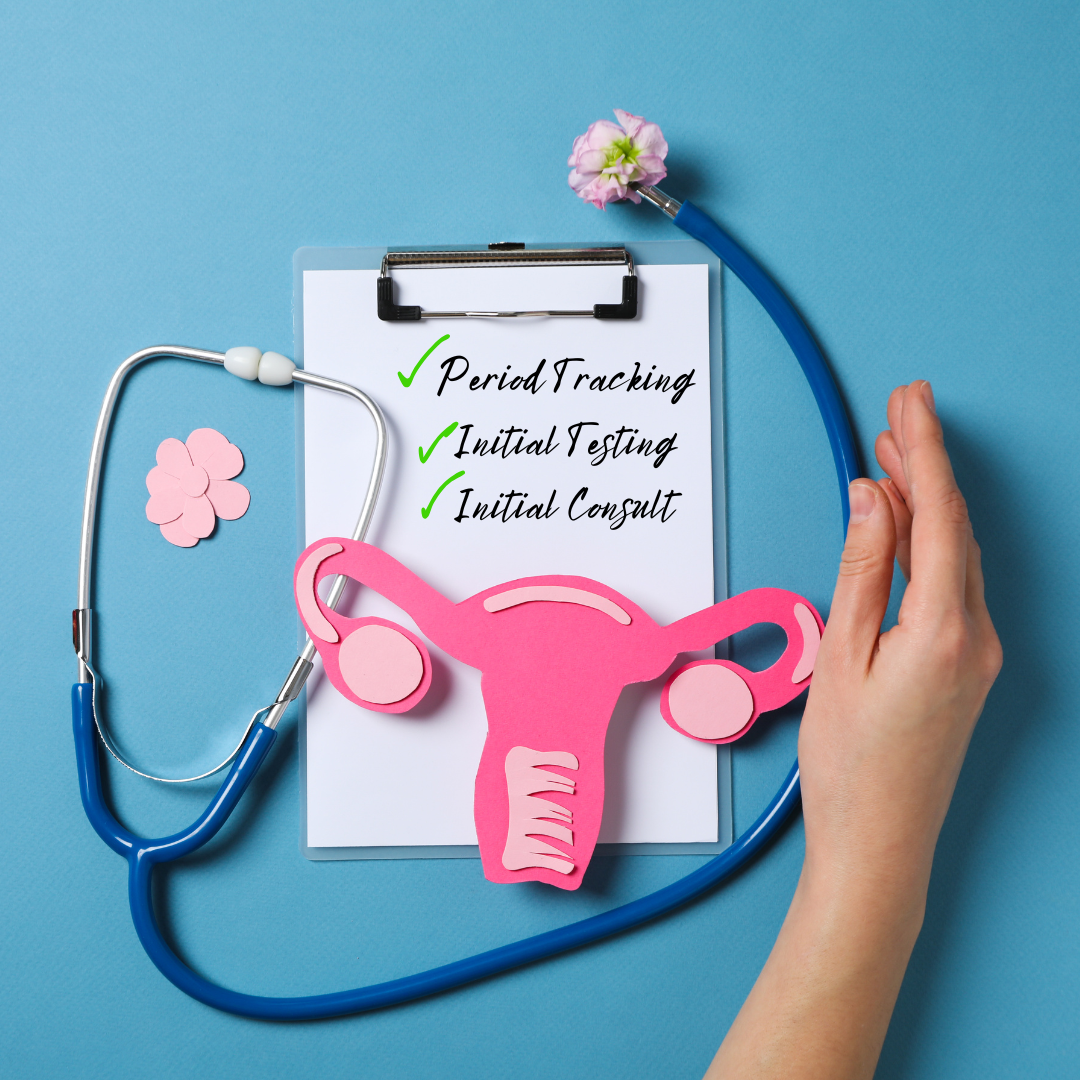
The best advocation you can do for yourself is know yourself. Know your body’s patterns and quirks. Begin by tracking your cycle. At minimum know your cycle's day one, number of days of your period, and/or flow patterns - if you have one.
-
Seek Treatment.
Whether you are thinking about getting pregnant, trying to conceive, or in the midst of your fertility journey - seek help from a doctor you trust and can learn from.
You have every right to interview doctors and seek additional opinions.
-
Get Tested.
Expect your doctor to order a full hormone panel, sperm analysis, and genetic testing after your initial consult. Having your initial hormone panel may help your doctor narrow down the main issues to tackle. You’ll learn more below and throughout this website!
Throughout your journey, you may have your AMH, TSH, PRL, EST, FSH, LH and *more tested multiple times over.
Family planning 101
START TRACKING
Trying to conceive (TTC)?
Trying NOT to conceive?
Ironic how you may experience both truths during your journey.
STEP 1: GET TO KNOW YOUR CYCLE
No matter what phase of this odyssey you are in, tracking your cycle is THE most basic step in family planning.
-
Tracking “Day 1” of your period each cycle
Day 1 is considered first day of bleed.
Spotting is not considered day 1.
Keep track of how many days your period lasts and its’ flow pattern.
PRO: FREE! Can track on digital or paper notes
CON: Difficult to recognize patterns and have to perform basic math.
-
Many apps will track your basal body temperature (BBT). Your body will rise slightly in temperature as it prepares for ovulation and decreases back to your baseline right before your period. When tracking by thermometer, aim to take your temperature at the same time each morning as soon as you wake up, before getting out of bed.
NATURAL CYCLES: A daily tracker for BBT, LH results, and experience that helps identify your fertile and non-fertile windows. This method aims to teach you how to innately listen to your body. Currently, this is personal recommendation because it automatically pulls the necessary daily data from my apple watch and it is not required to return to the app each day for credible results. $120+ annually. Device required: Thermometer, Oura ring, or apple watch required. Graphically shows your rise and fall in BBT. Alerts you of your physical and emotional trends. HSA/FSA Eligible
Flo Period
Clue Period
Stardust
My Calendar
Spot On
***Not an exhaustive list
-
Apple Watch - iPhone Health App
Oura Ring - Monthly subscription not included
Additional Tool:
LH strips - AKA Ovulation strips. These urine tests indicate the rise in Luteinizing Hormone (LH).
Once you get the hang of the length of your cycle, consider adding LH strips to understand your ovulation window. A sharp rise in LH indicates ovulation. A typical ovulation window lasts 6 days, with day 5 and 6 being your most fertile days. HOT TIP (pun intended 😜): sperm can swim happy and healthy in your body for up to 5 days.
-
INITO: A device that connects to your phone, records biomarkers, and syncs results to the Inito app. This tool gives you insight to much more detailed data than many apps provide. However, it can be quite costly and difficult to maintain consistency.
$150+ start kit, $49+ per 15 strips
Must connect device daily and record first morning void (urine sample)
Measures EST, LH, Progesterone (PdG), FSH
Graphically depicts biomarker results
HSA/FSA Eligible
KEGG Fertility: kegg® is a medical-grade fertility tracking device that gives you accurate and personalized fertility tracking through cervical fluid in just 2 minutes a day.
SEEK TREATMENT!
Our goal is the information contained in this website will help guide and enhance your short doctor's appointments.
Every journey is unique because ever body is different. However, there are basic steps each person should take during their journey to help answer questions and find their personal solutions.
Interview doctors!
Be prepared to discuss the medical history of all involved parties
Topics may include: menopause, metabolic reproductive syndrome, cancer
Ask questions ensuring the office is a good fit for you!
Such as how do they communicate with their clients - through an app, emails, or direct line of communication between the nursing staff and the client?
How many clients does each IVF coordinator handle per cycle?
Available testing & treatments options & timing
Financial breakdown
If meeting in person, expect to sign legal documents!

GET TESTED!
*
GET TESTED! *
Friendly reminder that no one on this team is a doctor. This website is a collection of advice we hope helps you during your personal journey.
One suggestion is getting your hormone levels tested to understand your baseline levels. Having baseline information could potentially help when you are interviewing doctors and give you all some insight on where to begin your focus. There are ideal ranges for most hormones.
If you do choose to get baseline testing, know your cycle day of the test.
BASIC TESTING
All Parties - Blood Tests
Genetic testing
Hormone Panel
STD Testing
FEMALE
Ultrasounds
Uterine analysis
MALE
Semen analysis
COMMONLY TESTED HORMONES:
AMH: Anti-Müllerian Hormone. The level of this hormone corresponds to your number of remaining eggs. In females, this hormone helps follicles grow during their cycle.
TSH: Thyroid-Stimulating Hormone. Ideally, your thyroid should be below 2.5 when trying to conceive.
PRL: Prolactin. Ideally, your prolactin levels should be less than 25 ng/mL when trying to conceive. In females, this hormone plays a role in ovulation, menstruation, and lactation.
EST: Estrogen. Mainly produced by the ovaries. This hormone fluctuates throughout your cycle and helps prepare for ovaries to release an egg and grow uterine lining.
FSH: Follicle-Stimulating Hormone. Works in tandem with LH hormone. Levels vary throughout cycle. Suggest testing this hormone on day 3 of cycle.
LH: Luteinizing Hormone. Expected to rise sharply prior to ovulation, triggering egg release.
*This is not a complete list of what can be tested, but are common testing points.
